
Robert C. Smith
Conservatism and Racism and Why in America They Are the Same
This is first a book about ideas and how they can have consequences in politics, if they are linked to powerful, well-financed movements.
I excavate the ideas on race of the leading conservative and neoconservative intellectuals from the 1950s to the 1980s. The ideas examined, among others, are those of Russell Kirk, William F. Buckley, Jr., James J. Kilpatrick, Milton Friedman, Robert Bork, Irving Kristol, Edward Banfield, Nathan Glazer and Aaron Wildavsky. These ideas helped to shape the presidential campaigns of Barry Goldwater and Ronald Reagan, the two leading conservative statesmen of the modern era.
For example, Bork, the conservative movement’s leading jurisprudential scholar, objected to the Civil Rights Act of 1964.
He described the landmark legislation as “unsurpassed ugliness” because, Bork argued, the core principles at stake in any civil rights law are individual liberty and property rights; it was the freedom of individuals to do with their property as they wished, even if they wished to deny access to a BBQ joint or motel to other individuals because they were black.
Similarly, Friedman, the movement’s apostle of unfettered, free market capitalism, compared the equal employment title of the 1964 Act to “Hitler Nuremburg laws” because “such legislation clearly involves interference with the freedom of individuals to enter into voluntary contracts with one another.”
The book includes detailed study of the Reagan presidency and race related issues. Using archival material from the Reagan presidential library, I focus on affirmative action, the Voting Rights Act, the Grove City case, welfare reform, South Africa policy, and the Martin Luther King, Jr. holiday. I conclude the book by showing how the conservative movement and the Reagan presidency have had an enduring impact on presidential elections, the presidency, the Democratic Party, racial liberalism and the continuing struggle for a more racially just society.
Editor: Erind Pajo
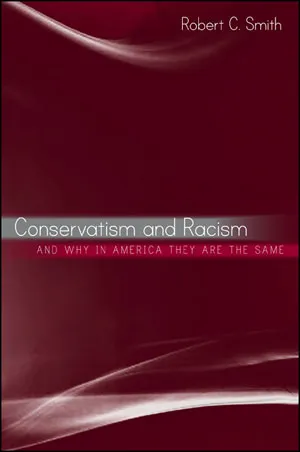
Conservatism and Racism and Why in America They Are the Same
Robert C. Smith Conservatism and Racism and Why in America They Are the Same SUNY Press 273 pages, 9 x 6 inches ISBN 978 1438432335
Available here →December 6, 2010
20101206-smith-robert-on-conservatism-racism-why-america-they-are-same-2
The wide angle
The rest of this thread
San Francisco State University
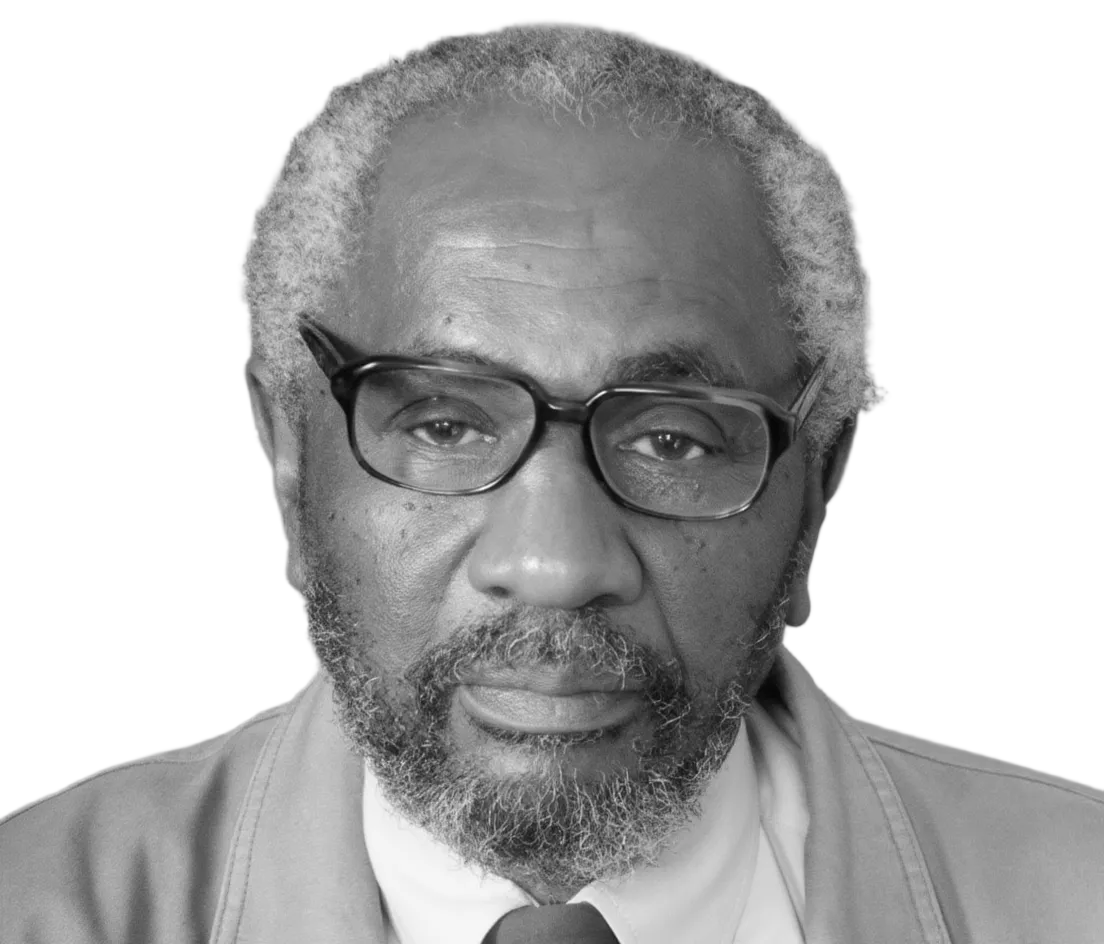
Robert C. Smith
Robert C. Smith is professor of Political Science at San Francisco State University. He received his undergraduate degree from UC Berkeley and his graduate degrees from UCLA and Howard University. Besides Conservatism and Racism and Why in America They Are the Same, Smith is also the author of the Encyclopedia of African-American Politics, scores of articles and essays, a dozen books, and the just-completed manuscript The Politics of Ethnic Incorporation and Avoidance: The Elections and Presidencies of John F. Kennedy and Barack Obama. In 1998 he was awarded Howard University’s Distinguished Ph.D. Alumni Award.
Pull this thread
pulls againstpulls alongside
American conservatism's ideals, applied consistently, inevitably produce racism, because what was established here was white supremacy.
Against TH · Ordinary crime control, not ideology, was one of the decisive steps to the Bolshevik totalitarian state. On: Ideology explains state and collective violence
Against HR · Wounded Knee happened because control of the U.S. Senate hung on one contested South Dakota seat. On: Ideology explains state and collective violence
Alongside DS · Dehumanization works because its victims are seen as human vermin, uncanny fusions of fellow human and subhuman creature. On: Ideology explains state and collective violence
Alongside AS · Russian revolutionary terrorism grew from deep Christian soil, and Zasulich's dream of martyrdom came from reading the Bible. On: Ideology explains state and collective violence
Alongside FF · Fascism was a transatlantic ideology, and Argentina's sacred Catholic version runs directly into Peronism and the 1976 dictatorship. On: Ideology explains state and collective violence
Alongside RA · Enver Hoxha is not explained by Albania, he was an ordinary twentieth-century tyrant of the Leninist type. On: Ideology explains state and collective violence
Know something the rest of us don't?
Most threads on Rorotoko begin with our invitation. Any thread can begin with a proposal: you write it with the same prompts every thread answers, and we review it.
Propose a thread →